Choose The Right Exit Route
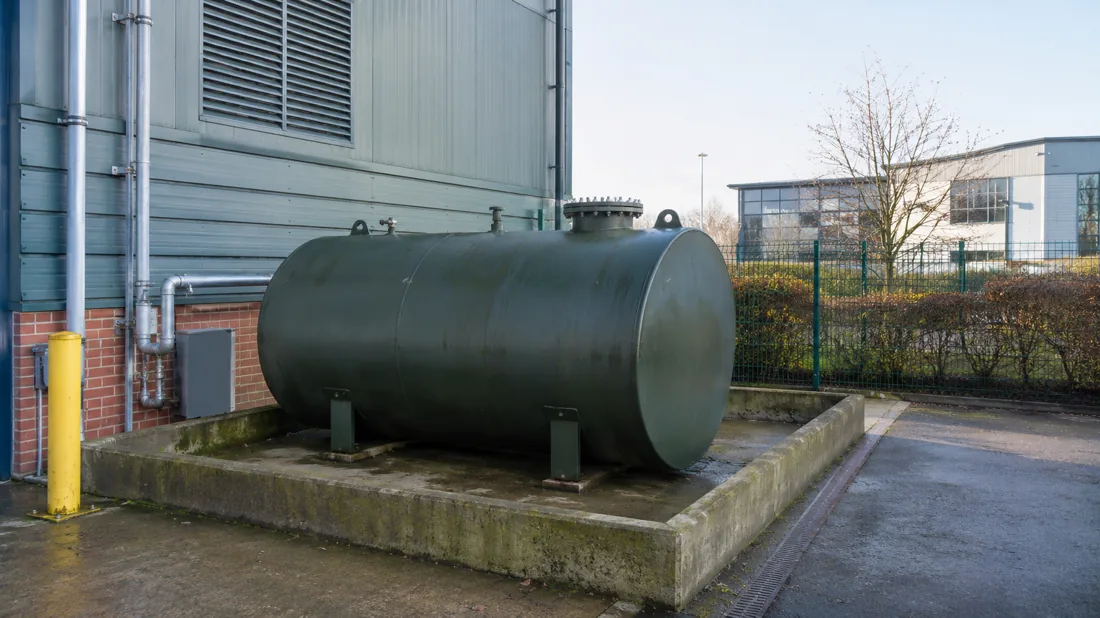
Fuel tank removal in Manchester often begins with a building that has changed around its plant. A steel tank may predate a partition, a new entrance or a mill conversion, leaving no direct route to the road. Knowing its capacity is useful, but knowing how it can leave is just as important.
The first decision is whether the tank can be removed whole or needs controlled dismantling. A whole lift needs room for lifting equipment, a suitable standing position and a clear load path. Sectional removal can suit an enclosed plant room, but introduces extra preparation, handling and working time.
| Site Situation | Planning Direction |
|---|---|
| Open yard, clear vehicle approach | Assess whole-tank lifting and vehicle loading. |
| Basement or restricted doorway | Survey sectional removal and the handling route. |
| Buried tank or uncertain ground | Investigate services, condition and excavation before agreeing removal. |
| Tank still feeding equipment | Agree continuity arrangements and a shutdown before disconnection. |
Removal is different from leaving a tank safely out of use. If excavation would affect a building or the tank must remain, discuss tank decommissioning before selecting a removal method.
Define What Leaves The Site
A quote should identify the tank and all associated items included in the job. Supply and return lines, redundant pumps, gauges, fill cabinets and supports may need separate treatment. A tank-only price can leave an unusable network of old pipework behind.
State what you want at completion: a clear floor, an empty bund, a base ready for replacement equipment or an excavation reinstated to an agreed specification. Concrete demolition, soil investigation and finished surfacing should be named rather than assumed. For a tenant exit, share the landlord’s requirements before the scope is agreed.
Plan Fuel Recovery Before Removal
A low gauge reading does not mean an empty tank. Fuel below the outlet, water and sludge can remain, and contamination affects whether the liquid can be retained. Give the approximate quantity and last known contents without opening or entering the tank to investigate.
Usable fuel may be suitable for transfer to approved storage, subject to condition and compatibility. Contaminated material needs a separate waste route, and mixing it with usable fuel can change the amount requiring disposal. If another tank will receive the fuel, its spare capacity and availability must be checked in the plan.
Ask for the quotation to distinguish fuel uplift, temporary storage, cleaning and disposal. These are different tasks with different cost drivers. Where fuel quality is uncertain, sampling can inform the decision before a removal date is fixed.
Agree The Working Sequence
The removal programme should start with the site survey and site-specific risk assessments and method statements. It then needs a controlled shutdown, competent isolation, fuel and residue recovery, cleaning, atmospheric assessment and the agreed lifting or dismantling method. This is work for specialists, not a preparation task for site staff.
Cold cutting is a method choice, not a declaration that an unprepared tank is safe. Former fuel containers can retain residues even after draining. Any proposed hot work needs its own assessment and controls, and a historic gas test does not describe conditions indefinitely.
Lifting arrangements need appropriate planning and supervision. The HSE guidance on LOLER explains the requirements for lifting operations. Crane position, ground support, overhead obstructions and nearby activities belong in that discussion, not in a last-minute decision at the gate.
Prepare The Access Information
Send photographs from normal safe positions showing the whole tank, its data plate, pipe connections, bund and the complete route towards the collection point. Include doorways, turns, steps and height restrictions. Existing dimensions and drawings are useful, but do not climb on the tank or remove covers to obtain them.
Tell us about loading restrictions, shared yards, traffic management, security checks and available working hours. On a factory site, a lorry position may conflict with dispatch operations. In a converted mill, occupied spaces and protected building fabric can limit the route or working period.
- Site postcode and a named person who can authorise access.
- Approximate capacity, construction, last contents and remaining fuel.
- What the tank supplies and the permitted shutdown period.
- Known leaks, inspection reports and the intended finished condition.
Compare Costs And Handover Records
The main cost variables are fuel quantity, residue condition, tank construction, lifting or cutting time, access and waste treatment. Excavation and reinstatement can be significant separate elements. An apparently smaller tank in an inaccessible basement can require more labour than a larger tank beside a clear loading area.
Ask which documents are included before accepting the quote. Relevant records may include the agreed RAMS, lifting documentation, a completion record, photographs and the correct waste paperwork. Hazardous waste requires consignment documentation, while non-hazardous waste uses the applicable transfer record.
Keep the records with the property file and asset register. Removal of the tank does not by itself confirm that surrounding ground is uncontaminated. A suspected historic leak may need environmental investigation beyond the removal contract.
Your Questions
Can A Tank Be Removed Through A Small Doorway?
Fuel tank removal through a small doorway may be possible by dismantling a prepared tank into manageable sections. The survey needs to check the tank material, working space, route and handling arrangements first. Send photographs of the entire exit route, since the narrowest door is not always the only restriction.
Does An Empty Tank Still Need Cleaning?
An empty tank can still need cleaning because sludge, trapped liquid and residues may remain inside. The safe preparation depends on its former contents and the intended removal method. Do not ask staff to open, cut or dismantle the tank before the specialist has assessed it and agreed the work controls.
Start With The Details You Have
Tell us the postcode, the equipment involved and the outcome you need. We can help establish the next step before you commit to a method.
Request A Quote