Start With What The Generator Supports
Generator removal in Manchester is a power-continuity decision before it is a lifting job. A set described as redundant may still be linked to automatic controls, alarms or a shared fuel system. Establish what it supplies and who can authorise its retirement before equipment is disconnected.
A factory closing one production area has different needs from an occupied building replacing its standby set. If replacement capacity is required, its installation and acceptance should be coordinated with the old equipment’s removal. A planned date is useful only when the dependencies behind it have been agreed.
| Your Situation | First Planning Question |
|---|---|
| Replacement standby set | When will the replacement be accepted for operation? |
| Building or tenant change | Who authorises permanent loss of the old backup supply? |
| Generator in a plant room | Can the set leave through the current openings? |
| Shared bulk fuel supply | Which tanks and lines must remain operational? |
Describe The Full Removal Boundary
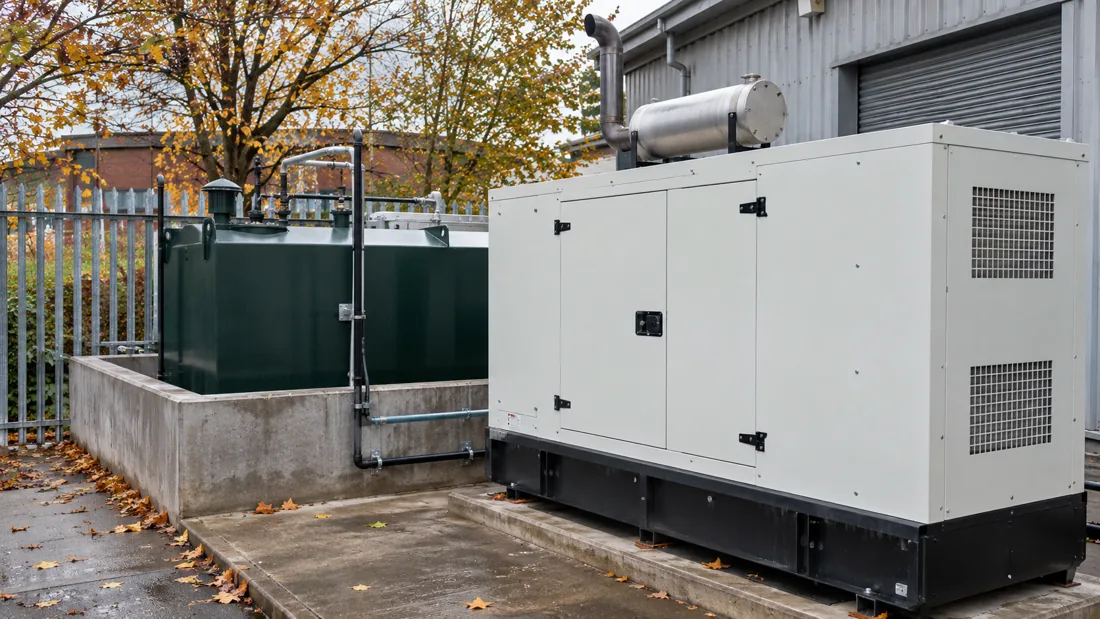
The generator package can include the engine, alternator, enclosure, exhaust, silencer, base tank, batteries, cabling and controls. These items do not necessarily leave under one trade’s scope. Identify which parts are included and which are being retained for the replacement system.
Electrical work needs a competent specialist and an agreed interface with the removal contractor. HSE electrical maintenance guidance explains the importance of safe isolation and competence. Do not ask site staff to disconnect supplies or bypass automatic starting controls in preparation for collection.
Exhaust routes and cable penetrations can leave openings after removal. Ask whether making good, weatherproofing and fire-stopping are included. If the generator sits on a plinth, specify whether the plinth remains or whether the finished area needs further work by another contractor.
Separate The Set From The Fuel Decision
An integral base tank and a separate bulk tank need different handling arrangements. Give the approximate fuel quantity in each and show which lines connect them. Usable fuel may be recoverable, but its condition and proposed destination must be considered before transfer.
Engine lubricants, coolant and batteries also need their own handling assessment. Do not treat an apparently drained set as ready for transport. The contractor needs to establish what remains, how it will be contained and whether it is part of a reuse or waste route.
If the bulk tank is staying, its continued condition and isolation from redundant branches matter. If it is leaving, include fuel tank removal in the enquiry. A generator collection price should not be assumed to cover every associated fuel asset.
Survey The Route And Lifting Position
Send the generator’s make, model, data plate and any existing weight information. The lifting assessment needs the equipment’s actual arrangement, not just an output rating. Enclosures, silencers and base tanks can alter dimensions and handling requirements.
The exit route may have changed since installation. Photograph doors, louvres, corridors, turns and the approach from outside the building. A plant room with a removable panel may provide an option, but structural alterations and reinstatement need agreement rather than an assumption.
For external lifts, identify overhead obstructions, nearby buildings, soft ground and underground structures. A competent lift plan needs a suitable crane position and an exclusion area that works with the site’s other traffic. On a busy depot, loading and dispatch may need to be rescheduled while the operation takes place.
Agree The Sequence With All Trades
A workable programme identifies who confirms the electrical status, who manages the fuel, who releases the set for movement and who accepts the cleared area. These responsibilities should be settled before the removal team arrives. Site permits, induction and the lifting plan need the same equipment description and scope.
The removal follows the agreed shutdown and specialist disconnection, then fluid management and preparation for handling. Movement and transport use the assessed method. Completion should include a joint check that retained services and surrounding areas match the agreed handover condition.
If you hope to sell or reuse the generator, say so at the outset. Removal for reuse can require a different handling standard and destination arrangement from disposal. No resale value or acceptance by another user should be assumed before condition and ownership have been checked.
Provide A Quote Pack And Request Records
Your enquiry should include the postcode, access photographs, equipment dimensions if held, known weight and the desired removal date. Explain what the generator powered, whether it still starts automatically and whether replacement power is already in place. Share existing maintenance records when they help establish the equipment’s condition.
Costs change with size, location, access alterations, lifting equipment and the fluid quantities to be managed. Electrical disconnection, fuel tank work, transport and reinstatement should be clearly assigned. Restricted working hours or a short outage can also affect mobilisation and coordination.
Ask for records matching the chosen route. These may include the isolation handover from the electrical contractor, the lift documentation, an equipment transfer record and waste records for discarded materials. Retain a final list of what was removed and what remains, and update the building’s plant and emergency-power information accordingly.
Your Questions
Can The Old Generator Leave Before Its Replacement Arrives?
Generator removal before replacement depends on the site’s agreed backup-power requirement and authorisation. The building or process owner needs to decide what loss of resilience is acceptable and whether temporary provision is needed. Tell us the commissioning plan and any restricted shutdown period so removal can be coordinated with the responsible specialists.
Is The Fuel Tank Included In Generator Removal?
The fuel tank is included in generator removal only when it is named in the scope. A base tank can form part of the set, while a separate bulk tank may serve other equipment. Send photographs of both and explain which assets must remain so fuel handling and tank work are priced correctly.
Start With The Details You Have
Tell us the postcode, the equipment involved and the outcome you need. We can help establish the next step before you commit to a method.
Request A Quote